Copenhagen: What Hygge Actually Felt Like


It's been a while — long enough that I almost forgot I had these pictures at all.
I visited Copenhagen one fall, back in 2020. It wasn't planned as a trip built around photography, I brought my camera along, the way I always do, without much expectation of using it seriously.
It came at a strange time for me. I'd had a rough few months, and going somewhere new, knowing nothing about the place, felt less like a work trip and more like a chance to start over. I wasn't looking for anything in particular. I just needed somewhere else to be for a while.
And then the place called to me. I hadn't planned to shoot much, but once I was there, walking those streets in the fall light, I found myself reaching for the camera constantly — not to document, just to hold onto something. I left with a full memory card and a feeling I couldn't quite name at the time.
The pictures sat untouched for a long time after that. Every so often I'd scroll past the folder and think, I should do something with these. It took this long to understand why I kept coming back to them: some places don't ask to be written about right away.
They wait until you're ready to see what they actually left you with.
So this isn't a travel guide, and it isn't a "best of Copenhagen" list. It's me, years later, going through old photographs and finding a memory worth saving properly.
The calm by the sea
One of the first places I went, almost instinctively, was Amager Strandpark, a long stretch of beach and dune just outside the city center, empty in the way fall coastlines usually are. It was cold, but people were still in the water. A group in wetsuits stood on a wooden platform getting ready to swim, wind turbines lined up on the horizon behind them, turning slowly in the grey. A little further down, kayakers paddled out past the breakwater, past a small floating café shuttered for the season, as if the cold was simply a detail to work around rather than a reason to stay in. Along the dunes, someone walked alone through the tall grass, bent slightly against the wind, in no apparent hurry to get anywhere.
Nothing about it was dramatic. It wasn't trying to be beautiful, and maybe that's exactly why it was. I remember standing there, camera in hand, thinking that this was as good a place as any to start over — a city that didn't need good weather or a crowd to still feel completely alive.
A city that doesn't rush you
Again and again, I'd find that same quiet persistence once I made my way back into the city itself. What stayed with me most wasn't any single sight, it was the pace. People in Copenhagen moved through their days softly, unhurried, each seemingly on their own schedule and at peace with it. Strangers were polite in a way that didn't ask for anything back. Warm, but never invasive. You could sit at a small corner café and nurse a coffee far longer than the coffee itself justified, and no one would raise an eyebrow. Nobody would rush you, nor themselves.
The one exception, of course, is the bikes. Cyclists move through that city with total conviction, and it takes a day or two to learn to get out of the way rather than expect them to slow down for you. That speed though didn't read as stress, it read as vitality. There's a real difference between rushing and simply being in motion. Nobody looked like they were trapped behind a wheel, tense, watching a red light. They were pedaling, wind on their faces, clearly glad to be moving through their own city.

Between the unhurried strangers and the cyclists moving with that same easy conviction, I started to notice a pattern and I think this is where hygge actually lives, not in the version we've been sold. Candles, wool blankets, a very specific shade of oat-colored linen, a coffee table book about "slow living": that's hygge as a product, something you can buy your way into.
What I felt in Copenhagen was something else entirely: quieter, less photogenic, and much harder to package. It was in the canals reflecting brick facades and the bicycles leaning against every wall like they belonged there more than the buildings did. It was in the way a whole city seemed to have agreed, collectively, that presence mattered more than productivity. You don't buy that feeling. You just have to slow down enough to notice it's already there.

Beyond the postcard
But Copenhagen isn't only canals and brick facades, and some of my favorite memories from that trip live outside the version of the city that ends up on postcards.
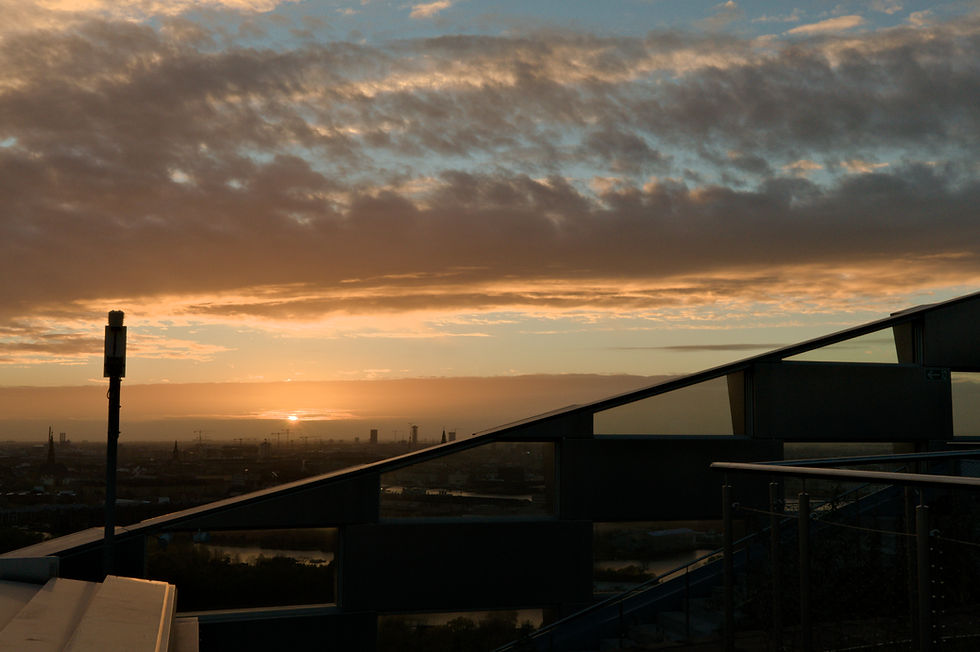
One evening I made my way to CopenHill — a ski slope and hiking trail built on top of a working waste-to-energy power plant, which is such a strange sentence to write and an even stranger place to stand. I got there for sunset, beer in hand, watching the whole city go gold beneath me from the roof of what is, functionally, a power station. It's a strange kind of magic: a piece of industrial infrastructure the city decided didn't have to be ugly, or hidden, or purely functional, it could also be somewhere people go to watch the sky change color together.
I found the same spirit, in a different key, at Kødbyen, the old meatpacking district, once full of working slaughterhouses, now full of restaurants, bars, and galleries tucked into the same raw brick buildings. Nothing was smoothed over or disguised; the industrial bones were still visible, still honest about what the place used to be. Copenhagen didn't erase its own history to make room for people to gather, it just gave that history a new job.
At some point you realize, the power plant, the slaughterhouse: this city has a real talent for taking what's utilitarian and making it communal, without pretending it was ever anything other than what it was.
A memory, finally developed
I think that's the real reason these photographs waited so long to become a story. It took distance to realize that what I loved about Copenhagen wasn't a list of places, it was a way of being in a place. Unhurried, but not lazy. Warm, but not performative. Willing to let old, imperfect things stay useful instead of tearing them down for something shinier.
Hygge, the way I experienced it, was about a whole city quietly agreeing to make room for people to slow down, to gather, to notice the sunset from wherever it happens to be watchable.
I'm glad I waited to write this. Some memories need time before you can see what they were actually about.

Words and Pictures: Laura Fanfarillo


Comments